
Border Trade Sectors
Overview
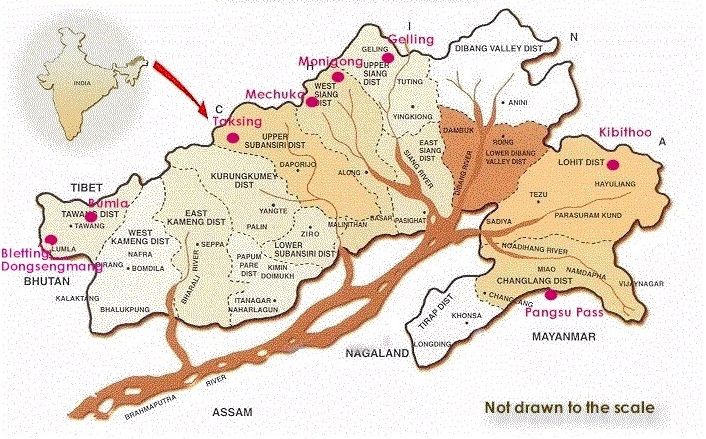
Arunachal Pradesh shares international borders with Bhutan, China, and Myanmar, making it a strategically important state for India’s cross-border trade. For centuries, people living in the frontier regions have engaged in traditional and informal exchanges of agricultural produce, handicrafts, livestock, and essential commodities with their neighbors. These exchanges were not only economic but also cultural, strengthening ties across communities divided by political boundaries.
However, several factors, most notably the 1962 Sino-Indian conflict, disrupted many of these traditional trade routes. Since then, trade relations have been uneven—continuing with Bhutan and Myanmar to some extent, while trade with China remains suspended. Recognizing the potential of border trade for regional growth, the Government of India and the Government of Arunachal Pradesh are actively working to revive, regulate, and expand these traditional markets through formal trade agreements, infrastructure upgrades, and institutional capacity building.
Strategic Importance
-
Economic Development: Border trade creates new opportunities for local farmers, artisans, and traders to access larger markets, raising household incomes and reducing economic isolation.
-
Regional Integration: Strengthened trade ties with neighboring countries promote people-to-people contact, cultural exchange, and cross-border cooperation.
-
National Priorities: Initiatives like the Look East Policy, Act East Policy, and South Asian Free Trade Association (SAFTA) emphasize Arunachal Pradesh’s role as a gateway to Southeast Asia.
BTRICB Project
The Border Trade-Related Infrastructure and Capacity Building (BTRICB) initiative provides the roadmap for modernizing and institutionalizing border trade.
Phase I focuses on:
-
GIS-based mapping of production clusters, physical markets, and trade routes.
-
Assessing socio-economic conditions, value chains, and informal trade practices.
-
Reviewing infrastructure gaps and trade regulations.
-
Identifying stakeholders, investment needs, and potential risks.
Phase II builds upon this with:
-
Formal partnerships with key agencies.
-
Training programs and awareness building for farmers, traders, and para-vets.
-
Creation of border trade infrastructure (markets, custom stations, warehouses, etc.).
-
Establishment of advisory groups for brand building and negotiations.
The outcome will be a robust framework for sustainable and competitive border trade, ensuring food safety, market security, and recognition of local products in international markets.
Border Trade Sectors in Focus
The Government of Arunachal Pradesh has identified three main international trade corridors, each with its own history, challenges, and opportunities:
-
Indo-Bhutan Border Trade – Flourishing cultural and economic exchanges supported by free trade routes and community ties.
-
Indo-China Border Trade – Historic trade routes disrupted in 1962, but with immense potential if reopened, especially for horticultural exports to Tibet.
-
Indo-Myanmar Border Trade – Active through Nampong (Pangsu Pass) and Stilwell Road, with vibrant local bazaars and growing formal infrastructure.
These sectors are supported by ongoing infrastructure projects—roads, bridges, custom offices, markets, and residential facilities—to facilitate safe, regulated, and mutually beneficial trade.
Vision for the Future
The revival and strengthening of border trade in Arunachal Pradesh aim to:
-
Provide economic self-reliance for border communities.
-
Boost export competitiveness of agriculture, horticulture, and handicrafts.
-
Enhance bilateral cooperation with Bhutan, Myanmar, and potentially China.
-
Position Arunachal Pradesh as a hub of India’s Act East engagement, linking the North-East with Southeast Asian markets.